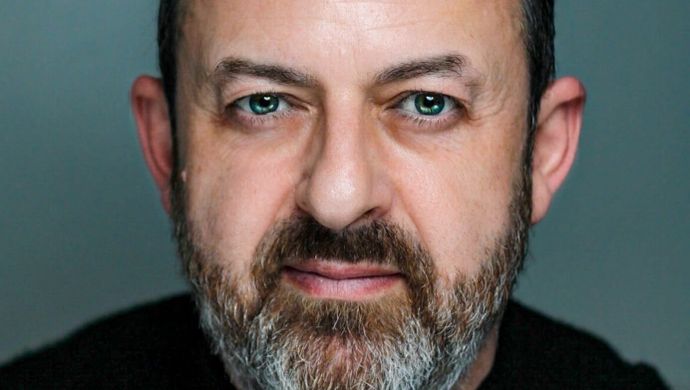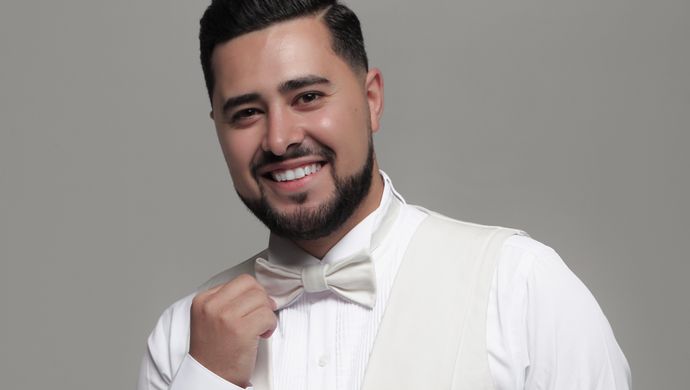

Meet the cast of Tosca: David Esteban is Mario Cavaradossi
Italian-Ecuadorian tenor David Esteban is set to make his Calgary Opera debut this fall, as the painter-activist Mario Cavaradossi in Puccini's iconic political thriller, Tosca. Cavaradossi is a role that most tenors are eager to perform — it has some of the opera's most achingly beautiful music, and his is a story of fighting for what's good, no matter the cost. As the anticipation builds for our October opening night, we caught Esteban for an exclusive interview about great characters, singing louder than a full orchestra, and his sightseeing plans for his first visit to Calgary.
What’s your favourite thing about the character of Mario Cavaradossi?
David Esteban: "My favourite thing about Mario Cavaradossi is his loyalty. He is loyal to his ideals, loyal to the woman he loves, Floria Tosca, and loyal to his friend Angelotti. Even under immense pressure, he never betrays what he believes in or the people he cares about. He remains faithful to them and to himself until the very end… I find that deeply admirable."
What moment in this opera thrills you the most, and why?
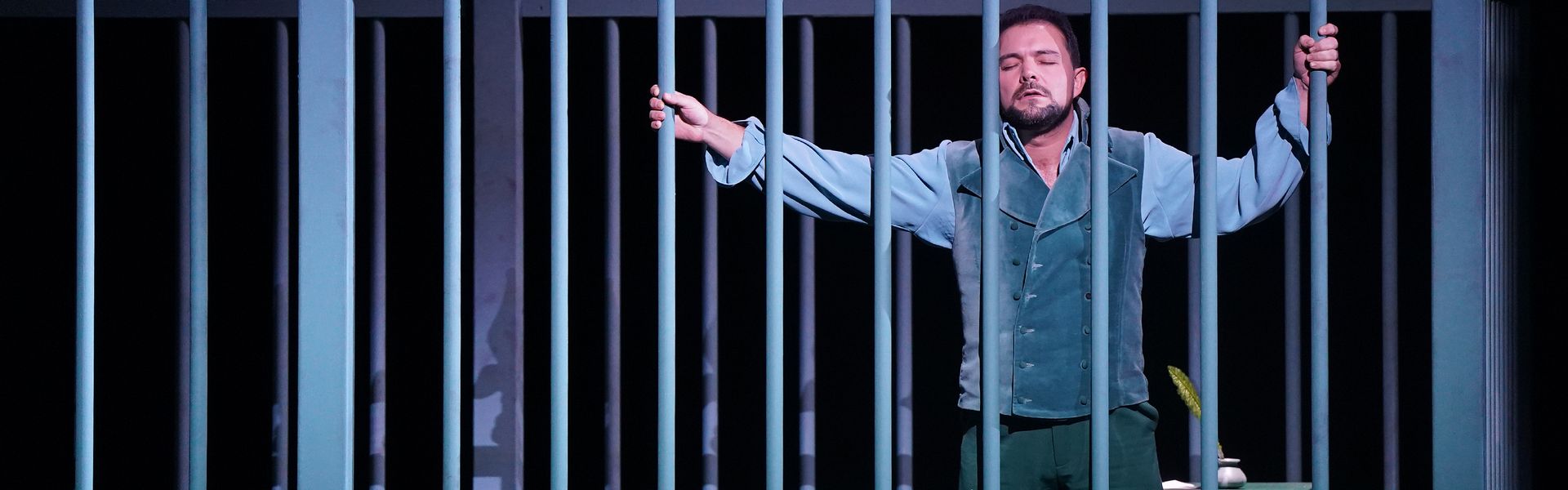
DE: "I would say the most thrilling moment is in Act II, when Cavaradossi is being tortured offstage. The dramatic tension is incredible; Tosca’s desperation in the face of Scarpia’s cruelty gives me goosebumps every time. I also love the opening of Act III: that quiet, early morning atmosphere, with the bells of Rome ringing in the distance, is just magical.
"What I find so exciting about Tosca is that the story unfolds almost in real time, which gives it this modern, cinematic quality. I really believe Puccini was one of the earliest composers to anticipate film music, with his sense of pacing, atmosphere, and emotional depth. His music is sublime because it speaks straight to the heart, while giving the singers and the drama room to grow. That’s why Tosca is so powerful and alive even today."
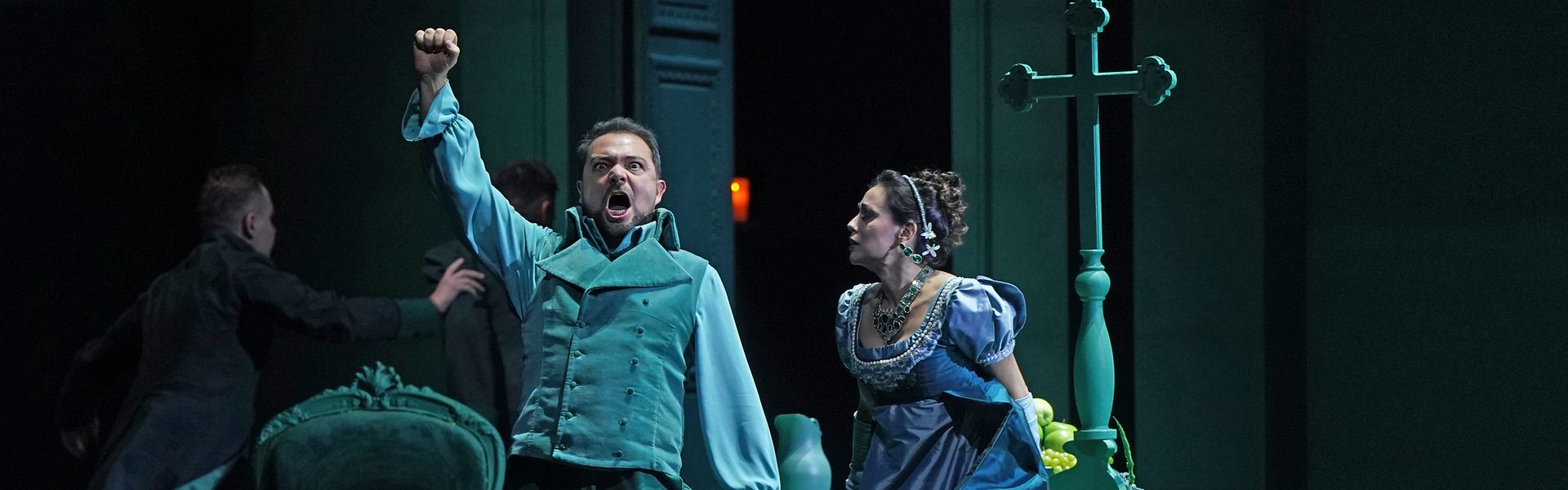
Why do opera singers sound like that?
DE: "Opera singers sound this way because the technique is built for resonance, clarity, and storytelling in large spaces. Unlike pop singing, operatic technique creates a fully supported, resonant tone that remains consistent and even across the entire vocal range, from low to high notes. Vibrato is a natural result of a free, well-supported voice. When breath support, vocal fold coordination, and resonance are properly balanced, a slight oscillation in pitch and intensity appears. It is not something forced or added artificially, but rather a natural byproduct of healthy singing technique. Vibrato also helps the sound feel alive and flexible in space.
"Excessive vibrato, however, can become distracting or stylistically inappropriate if it reduces clarity of pitch or text. Ultimately, opera is fundamentally about communication: singers are storytellers first, and the goal is to embody a character fully and transmit emotion through both words and sound, not just produce beautiful tone. "
How do singers project over an orchestra without amplification?
DE: Operatic singers are able to project over a full orchestra without amplification thanks to a unique acoustic phenomenon known as the singer's formant. Through years of training, singers develop a resonance that concentrates sound energy in the 2.5–3.5 kHz frequency range, where the orchestra is less dominant. This creates the brilliance and carrying power known in Italian as squillo, a bright, ringing resonance that allows the voice to travel through the theatre and remain clearly audible above the orchestra.
"Effective projection is therefore not a matter of singing louder, but of using resonance, balance, and efficient vocal technique. When properly developed, these acoustic qualities enable opera singers to fill large theaters with sound while maintaining beauty of tone, freedom, and expressive power."
What TV series or film do you think is most similar to Tosca?
DE: "Sincerely, I've never really thought about these kinds of comparisons before, but if I were to find a similar relevance from Cavaradossi's perspective, I would think of Gladiator. Like Cavaradossi, Maximus is a man of deep conviction, driven by love and loyalty, caught in a brutal, corrupt system. Both face political tyranny and betrayal, and both pay a tragic price for their integrity. Their stories are grand, operatic, and steeped in sacrifice and honour, Gladiator is like a Puccini tragedy brought to life in an epic frame."
What do you plan on exploring in Calgary while you're here?
DE: "I've heard that trying a great Alberta steak is an absolute must while I'm in Calgary, so that's definitely on my list. Beyond that, I really enjoy sightseeing, walking around, and spending time in nature, so I'm excited to explore Calgary's parks, pathways, and surrounding landscapes. I'm also really curious about Calgary's multicultural side — I can't wait to discover the different communities, events, and especially the diverse food scene. I love exploring local cuisine wherever I go.
"I'm definitely hoping to fit all of that in, though it will depend a bit on my work and rehearsal schedule. Still, I really want to make time to explore different places, enrich my culture, and broaden my knowledge. I think Calgary's going to be an amazing experience."
What non-singing skill do you have that you’re most proud of?
DE: "You know, I’m really grateful for a couple of things, one is that I seem to have a good sense of direction when I travel. I have a pretty strong visual memory, so after just a day or two, I can often get around without needing to check a map. And I’m also a polyglot, I speak four languages: Italian, Spanish, English, and German, and I'm slowly learning French. I don't know, I just feel really fortunate that these things come naturally to me and help me both in life and in my work."
Suggested stories